
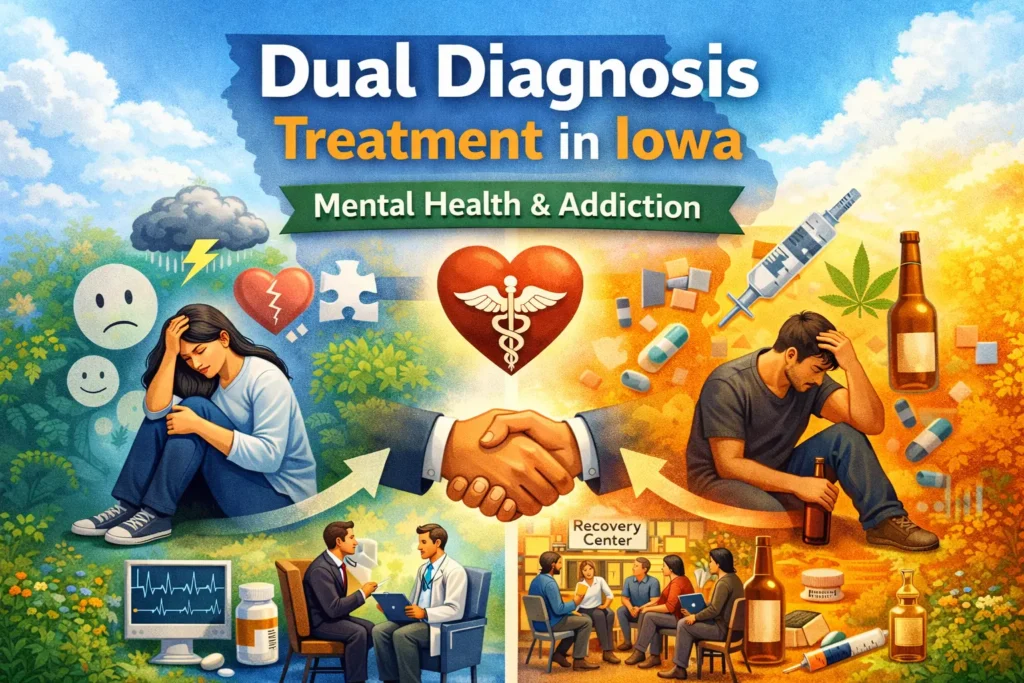
Are you feeling confused between addiction and emotional pain and cannot identify a clear way to exit? This is the reason why Dual diagnosis treatment in Iowa is important. It does not only deal with a single symptom as opposed to the entire individual. To really recover, one needs equilibrium of the brain, rest in the heart, and flexibility in the routine. You can balance it through integrated care. It provides treatment, medical assistance and nutritional reconstruction simultaneously.
Many people in Iowa are grappling with substance abuse and overcoming depression, anxiety, or trauma. This kind of challenge is circular. As one of them becomes more terrible, the other becomes better. Attempting to resolve the internal emotional trauma might not suffice to cure addiction without healing the underlying emotional traumas. In that case, the use of mental health therapy without substance use cannot work as well.
Having the two the same condition, the people have fewer cases of relapses. This makes them also more emotionally stable. Hence, It becomes easy to develop coping skills. Such a strategy gives a platform of long-term recovery and hope.
What Is Dual Diagnosis Treatment in Iowa?
Dual diagnosis treatment in Iowa is aimed at persons having both illnesses of substance use disorder and mental illness. All these factors interact in complicated manners. One often worsens the other.
Addiction is normally associated with mental health disorders such as depression, bipolar disorder, PTSD, ADHD and schizophrenia. All the conditions have an influence on brain chemistry. Substance use also alters the brain chemistry. While the effect of two when they interact can be overwhelming.
Drugs alter the brain chemistry in the short term. Also, they can provide short-term relief. In the long run, they cause emotional instability.
Addiction may be more susceptible in the case of a mentally ill person. So, psychiatric symptoms may be worsened by addiction. Without the integrated intervention, this cycle may last years.
Dual Diagnosis Treatment in Iowa: Understanding the Root Causes
Trauma and Unresolved Emotional pain
One of the most vivid underlays of dual diagnosis is trauma. Emotional scars may be very deep due to childhood abuse. Moreover, the loss or violence can cause permanent fear.

Drugs tend to be a means of dulling the painful memories. Moreover, this coping style can initially be useful. It ultimately becomes a source of misery.
The imbalance of chemicals in the brain
Addiction interferes with neurotransmitters such as dopamine and serotonin. These are mood-controlling, motivation, and sleep-controlling chemicals. Once the use of the substances is ceased, it’s hard for the brain to find a balance.
Lack of motivation may be due to low dopamine. Hence, reduced serotonin can augment depression. Such symptoms have the potential of causing relapse in the absence of support.
Self-Medication Patterns
Some drink or take drugs in order to deal with fear or depression. They can even be unaware that they have a condition and can be diagnosed with a mental problem. Even the addiction itself is a symptom of more distress.
This is the reason why the Dual diagnosis treatment in Iowa is initiated by a complete evaluation of mental health. Providers do not focus on surface behaviors. So, they find their root causes.
Signs You May Need Dual Diagnosis Treatment in Iowa
The early identification of the signs helps to avoid any complications in the long run. You might require professional assistance in case you:
- Feel depressed even when being sober.
- Have panic attacks that do not have obvious causes.
- Take drugs to fall asleep or relax.
- Ashley experiences severe mood fluctuations.
- Relapse in case of emotional stress.
- Experience excessive guilt or shame.
- Experiences despair.
When the symptoms appear concomitantly, Dual diagnosis treatment in Iowa may offer specific care and stabilization.
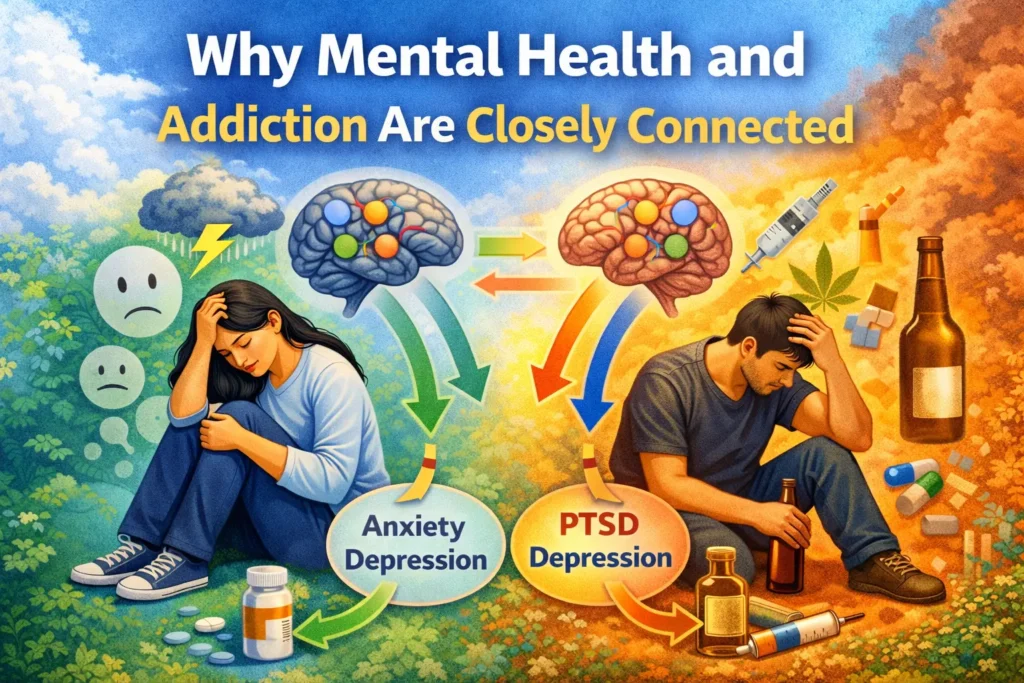
Why Mental Health and Addiction Are Closely Connected
Mental health disorders are known to cause emotional trauma. To get rid of that pain, many of them use drugs or alcohol. The relief is both temporary and strong.
As an example, depression reduces the levels of dopamine in the brain. Artificial boosting of dopamine may be produced by drugs, which causes pleasure. The stress and tension are intensified by anxiety. Also, alcohol can have the effect of drying the body. But when the substance is exited out of the system, the symptoms tend to reemerge stronger.
This forms a vicious circle. The brain gets addicted to substances in order to be normal. In the meantime, the psychopathology keeps getting worse.
Dual diagnosis treatment in Iowa can eliminate this cycle by educating on safe coping techniques. Therapy is used to make people understand triggers. Moreover, drugs can be used to stabilize mood. As a result, the brain starts to recover itself as time passes by.
How Dual Diagnosis Treatment in Iowa Works
Comprehensive Assessment
The treatment begins with the medical and psychological screening. Physical health is assessed by doctors. The therapists evaluate emotional history also.
An individualized treatment strategy is thereafter developed. Additionally, the conditions are considered equally in this plan.
Medical Detox When Needed
There are those who need supervised detox. This provides safety in the withdrawal. Because it also balances the body prior to the commencement of therapy.
Integrated Therapy for Dual Diagnosis Treatment in Iowa
Therapy cures addiction and mental illness simultaneously. Common approaches include:
- Cognitive Behavioral Therapy
- Dialectical Behaviour Therapy
- Trauma-oriented therapy
- Team counseling
- Family therapy
Both approaches develop coping skills. Both of them decrease the risk of relapse.
Medication Management
Not all clients do not require antidepressants or mood stabilizers. Severe symptoms can be minimized by medication. Furthermore, it enables therapy to be more productive.
Holistic Healing
Nutrition is a very crucial part. Work is a natural mood enhancer. Mindfulness reduces stress. Generally. treatment of dual diagnosis in the state of Iowa is not about fixing it in the short run, but rather in the long run.
Inpatient vs. Outpatient Dual Diagnosis Treatment
| Feature | Inpatient Care | Outpatient Care |
| Supervision | 24/7 medical support | Scheduled visits |
| Structure | Highly structured routine | Flexible schedule |
| Best For | Severe dual diagnosis cases | Stable individuals |
| Therapy Access | Daily sessions | Weekly sessions |
| Environment | Controlled setting | Home-based living |
Both alternatives will be able to provide Dual diagnosis treatment in Iowa. However, the decision to make the right choice depends on the severity of the symptoms and the stability of the home.
Benefits of Dual Diagnosis Treatment in Iowa
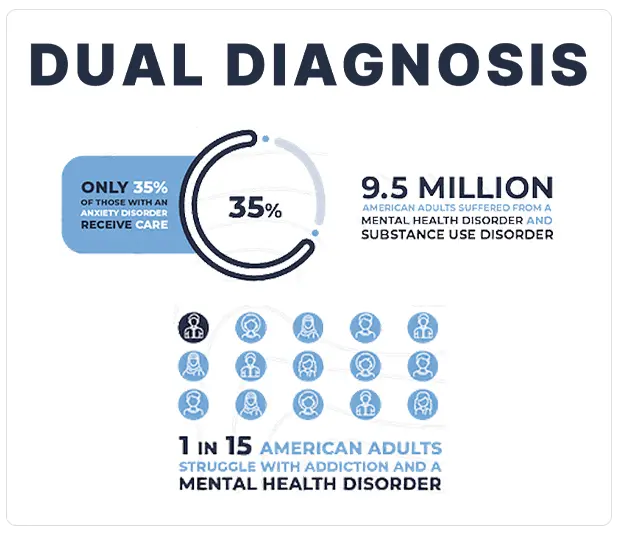
There are numerous benefits of the Dual diagnosis treatment in Iowa:
- Cures the cause of problems and not the result.
- Reduces relapse risk
- Enhances emotional stability.
- Strengthens coping skills
- Supports long-term sobriety
Integrated treatment also helps to cut down on hospitalizations. Meanwhile, it enhances the general living standards. Above all, it offers hope.
Challenges in Recovery
The process of recovery may come with moods. The withdrawal symptoms can be severe at the beginning. The mental health symptoms can be temporarily experienced as the body loses the substances.
Stigma also may cause barriers. There are those who are ashamed to acknowledge that they require psychiatric assistance. Others are afraid of being judged as being addicts.
These challenges are dealt with using structured programs through professional guidance. Over time, resilience grows. Individual small achievements become the steps to the long-term restoration.
Medication and Psychiatric Support
Drugs can become crucial in the stabilization of symptoms. Antidepressants have the potential to decrease incessant sadness. Significantly, bipolar disorder can be controlled through mood stabilizers. Anti-anxiety drugs relax panic symptoms.
Addiction drugs like opioids or alcohol dependence drugs decrease the craving. Such drugs are closely monitored by medical practitioners.
In Dual diagnosis treatment in Iowa, the medication plans are modified depending on the progress. Safety and effectiveness are achieved through regular follow-ups.
It requires medication but not only that. So, it is most effective when used in combination with therapy and lifestyle change.

The Importance of Aftercare and Ongoing Support
The process of recovery is a prolonged one following the formal treatment. The aftercare planning is vital to uphold the progress.
With the help of regular therapy sessions, emotional guidance is continued. The groups of support bring about accountability. Sober living homes provide organized environments.
Frequent psychiatric visitations are done to maintain the stability of the mental health. Therefore, lifestyle coaching can be used to assist people to regain careers and relationships.
Conclusion
Living with addiction and mental health problems is overwhelming. Though the emotional pain-substance use cycle might appear endless. But there is hope.
The problem of dual diagnosis treatment in Iowa is addressed in a comprehensive manner. It treats a brain, body and spirit jointly. It deals with trauma and chemical imbalances, as well as behavioral patterns.
Physical healing is enhanced by nutrition. The emotional resilience is restored through therapy. Severe symptoms are stabilized by medical treatment.
When all these factors combine, recovery will be sustainable. Hence, stability replaces chaos. So, the hopelessness is substituted by the purpose.
Connect With Us on Social Media
Follow us on social media to be motivated, be up-to-date, and be part of an encouraging community of people that focus on recovery and well-being. So, join us today and make a journey to a healthier, sober life!
Follow and connect here:
Visit our shop below to get the foundation you need!
 English