
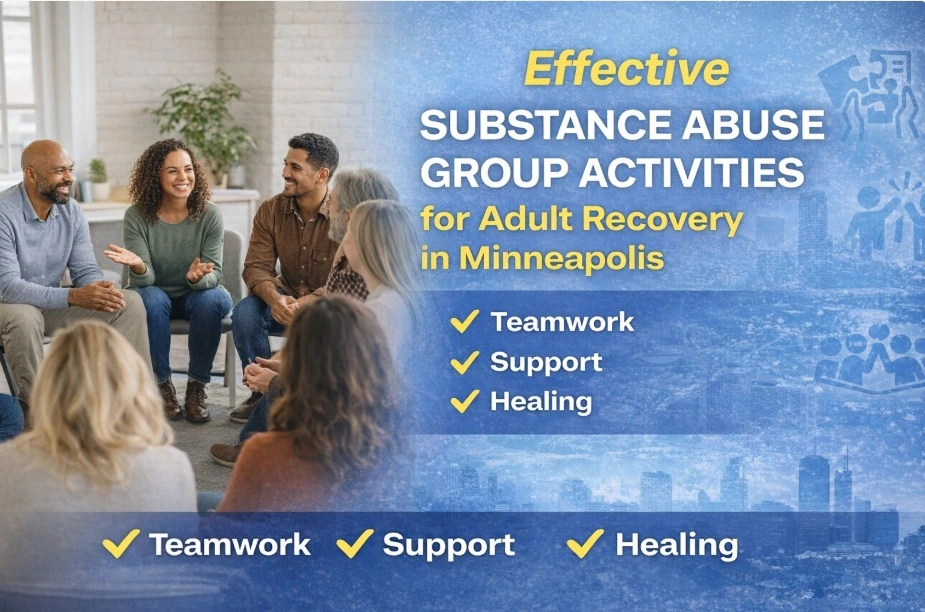
A great number of adults come into the world of recovery feeling confused and emotionally drained. They can be full of guilt, shame, or fear of failure. Some feel isolated. Some are afraid to share their personal problems with strangers. Such feelings can cause sobriety to be too daunting at an early age.
This is the reason why organized and involved substance abuse group activities are so significant. Once purposefully designed, they generate safety and trust. They provide adults with an opportunity to have a blank slate and substitute loneliness with affiliation. Also, they also inject some element of fun, which is necessary to restore happiness in sober living.
Recovery programs are still expanding and developing in Minneapolis. Adults will also enjoy group sessions that are therapeutic as well as skillful in life. The guide discusses effective, interactive and goal-oriented activities that enhance a long-term recovery process and enable adults to establish solid ground to live a sober life.
Why Substance Abuse Group Activities Matter in Adult Recovery
It will take more than substance cessation to recover. Adults require rebuilding of routine, relationship, and emotional stability. The majority of them are concerned with stress, being lonely, and money. These difficulties elevate the possibility of relapse without assistance.
Substance Abuse Group Activities are well thought-out and structured. They teach coping skills, improve communication, and enhance responsibility. Above all, they develop mutual understanding between participants.
Minneapolis has good community networks that aid in recovery. The role of group work is highly central in reducing the rate of relapse and improving long-term stability.
Fun and Engaging Substance Abuse Group Activities for the recovery of Adult
1. Recovery Bingo
Recovery Bingo makes heavy subjects entertaining. The participants go around the room inquiring of others about what they had gone through. This is a natural point of discussion. It reduces social anxiety. It promotes truth without compelling profound revelation.
Discuss the game postgame. Inquire of members on what it was like to share wins. Promote consideration of small achievements. Such talks strengthen good practices.
2. Playing Actual-Life Scenarios
Role-playing trains adults on high-risk situations. The relapses occur to a great number of people as they are taken by surprise. When responses are practiced, confidence is achieved.
Allocate roles and change participants. Promote genuine reactions. Following every scenario, permit group feedback. Talk about other coping strategies. It is also possible to include a pause and coach option. This will enable the group to interrupt the role-play and propose healthier responses on the spot.
Refusal skills and emotional control should be practiced in Minneapolis where social gatherings and other communal events are prevalent.
3. Vision Board Workshop
Vision boards can be used to redirect the focus on hope. There are numerous adults in the recovery process who dwell on the errors of the past. Such an exercise stimulates progressive thinking.
Offer magazines, art materials and printed affirmations. Ask the members to separate their boards into life areas:
- Career
- Family
- Health
- Personal growth
- Spiritual wellness
Promote specific objective formulation. As an illustration, they may not say “get healthy” but may say “exercise three times per week” or “cook my own food.”
Once this is done, Have each participant show his/her board. Accountability is created through open sharing. Put up display boards in the meeting room where possible. Under Substance Abuse Group Activities, this workshop strengthens long-term motivation and future planning.
4. Gratitude Circle: Best substance abuse group activities
Appreciation enhances the emotional equilibrium. It changes the perspective between loss and growth. Begin with quiet reflection. Ask the participants to name three things that they identify as being important to them. Encourage depth. Examples may include:
- I am glad I was awake in a clear state of mind.
- I like how my friend calls in every day.
Once you have shared, talk about the effect of gratitude on mood. Inspire members to have gratitude journals daily.
To increase this activity, add gratitude partners. Members share supportive notes once a week. This enhances bonding and reinforcement.
5. Group Walks Around Local Parks
The city of Minneapolis has amazing outdoor areas where one can take walks, and this is therapeutic. Workouts reduce the stress hormones. Nature inspires an undisturbed consideration.
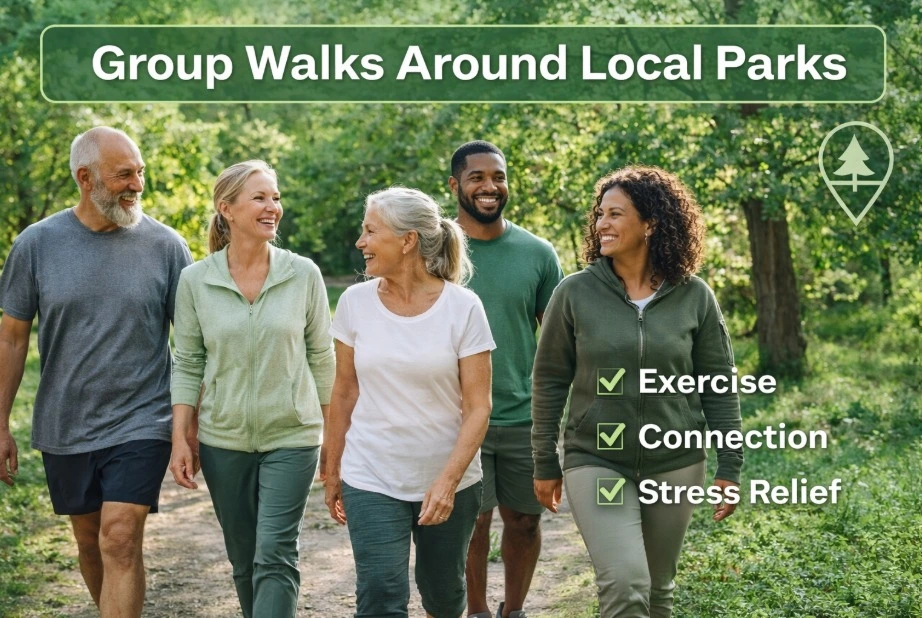
Reflection prompts can also be presented during the walk by facilitators, e.g.,
- What do you consider your strongest personal ability that has helped in the recovery process?
- What is the new practice you are establishing?
Include brief contemplations. Ask them to watch sounds and sensations. This strengthens awareness. The Substance Abuse Group Activities are usually outdoor-based and usually assist members who find it difficult to cope with the conventional seated activities.
6. Volunteering as a Group
Service builds self-worth. A lot of adults undergoing recovery feel guilty about what they used to do. Donation brings about good identity transformations. Prior to volunteering, have a planning session. Talk about expectations and objectives. Then process the experience jointly.
Promote continuous participation of the community. Volunteers are regularly welcomed in food banks and nonprofit programs in Minneapolis. Substance Abuse Group Activities have purpose and accountability as service-oriented activities.
7. Stress Management Workshops
One of the best triggers of relapse is stress. Avoid worrying about practical things such as deep breathing practice and grounding exercises to relax the body.
Give members practicing time during the session. Divide participants into pairs and explain to one another how to do things. Learning is enhanced by teaching. Monitor the level of stress on weekly simple rating scales. Discuss changes openly.
These organized substance abuse group activities provide the adult with the means that they can make use of in their day-to-day lives.
8. Financial and Employment Skill Sessions
Anxiety is a frequent consequence of financial stress. Concrete workshops on budget planning and debt management.
- Setting savings goals
- Responsible credit building.
Add mock interview practice. Professional communication role-play. Go through resumes in small supportive groups. Help the members to establish career objectives. Work enhances self-confidence and security. Long-term recovery outcomes are greatly enhanced by job readiness in Minneapolis.
Benefits of Substance Abuse Group Activities for Adult Recovery in Minneapolis
When engaging in or participating in organized substance abuse group activities, various benefits are realized other than attending the sessions.
Lowers loneliness and make relations
When the adults are in the process of recovery, they tend to be lonely or disconnected. The group sessions are a safe area where one can meet other people that share their issues. The possibility to share experiences and help peers makes one feel a sense of belonging and feel less isolated when passing through hard times.
Develops the communication skill
Group activities promote openness and listening. The discussion circles and role-playing help the participants to understand how to effectively express feelings, solve the conflicts, and restore relations, personal and professional.
Enhances Coping Procedures
Formal exercises provide empirical skills of coping with stress, cravings and emotional arousal. Mindfulness exercises, recording thoughts and peer review can help the adults to be healthy.
Supports Emotional Intelligence
Emotional intelligence is improved through such activities as journaling, discussion groups, and creative assignments. The members learn to identify feelings and patterns and express feelings in a positive way and this is what makes them resilient and reduces chances of relapse.
Endorses Relapse Prevention
By identifying triggers and practicing the coping skills in a supportive environment, adults know how to predict and prevent the high-risk situations. The relapse prevention is more realistic, empowering, and implementable in real life by the structured group sessions.
Conclusion: substance abuse group activities
Healing must be done on a daily basis and in an environment that facilitates healing. Adults should be allowed to go through challenging sessions in a structured and interesting way.
Structured substance abuse group activities provide safe venues of truthfulness and development. They develop coping mechanisms and regain confidence. They substitute the separation with interrelation.
Strong community resources and interesting group sessions in Minneapolis result in powerful change. By enabling and empowering adults, long-term sobriety will be a feasibility.
Connect with Us on Social Media
Follow us on social media to be motivated, be up-to-date, and be part of an encouraging community of people that focus on recovery and well-being. So, join us today and make a journey to a healthier, sober life!
Follow and connect here:
You can remain connected to get continuous support, encouragement, and resources to continue to stay strong, confident, and sober wherever you travel in life.
Visit our shop below to get the foundation you need!
 English