
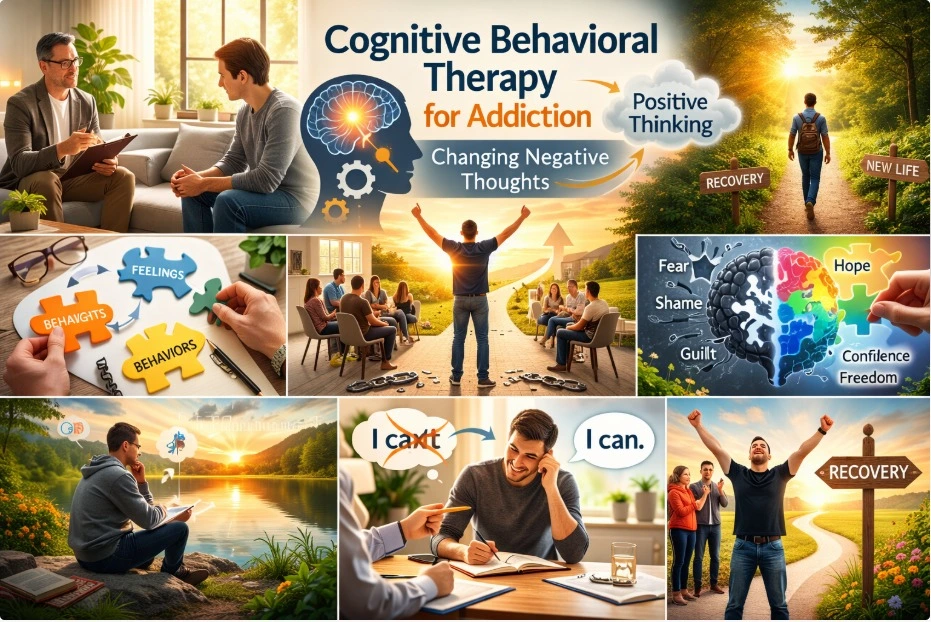
Have you experienced being caught in the negative thoughts that continue to draw you towards the addiction? The same trend is a problem in Osseo. They would like to quit using substances, but they think they are weak or hopeless, or they cannot change their minds. These thoughts feel real. In the long run, they condition the behavior and cause a vicious circle. Cognitive behavioral therapy for addiction is one of the most effective means. This treatment is used to make people identify the unhealthy beliefs and then change them to healthy beliefs.
Substance addiction is not merely a substance issue. It is also concerning thinking patterns. The body listens to the harmful lies that the mind believes. This is why most recovery programs in Osseo are currently revolving around efforts that aim at reforming thoughts as well as reformulating habits.
This article will answer these questions: how cognitive behavioral therapy for addiction works, why this approach is so strong, and how it will be possible to change negative thinking to strength, hope, and long-term recovery in Osseo.
Understanding Addiction and Negative Thought Patterns
Addiction is usually initiated as a coping mechanism. One can consume alcohol or drugs to forget the stress, trauma, loneliness or depression. At first, it seems helpful. However, it eventually makes the brain addicted to it.
Addiction is supported by negative thoughts. These thoughts may include:
- I cannot manage stress without drugs.
- It does not matter; I have already failed.
- “No one understands me.”
- “I’m not strong enough to quit.”
These values cause emotional trauma. That suffering enhances longings. The cycle continues.
In Osseo, the number of persons looking to recover finds that this is a cycle that cannot be broken by sheer resolve. They require a means to transform their thinking. It is at this stage that cognitive behavioral therapy for addiction comes in handy to make a difference.
Cognitive Behavioral Therapy for Addiction and Brain Rewiring
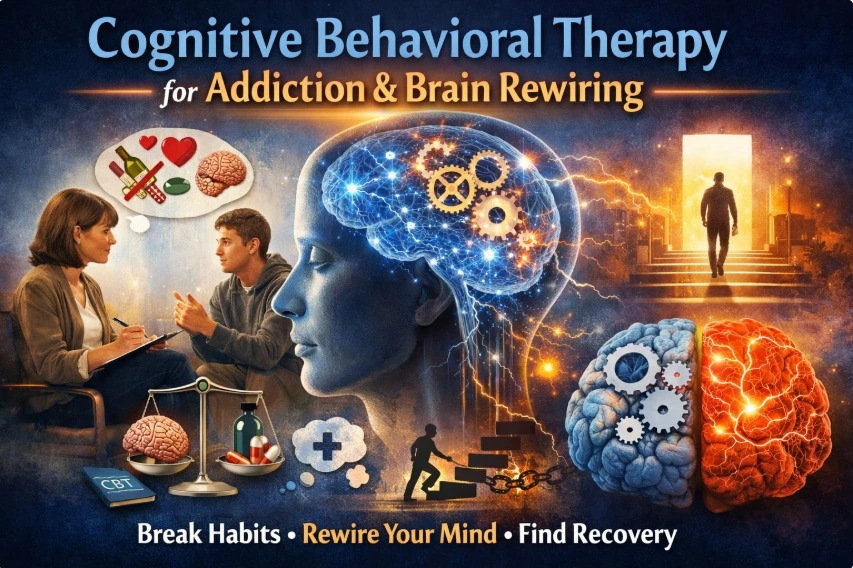
The addiction impacts the reward system of the brain. It alters the effects of the brain on stress and pleasure. With time, the brain gets programmed to pursue substances.
The positive side is that the brain processes can rewire themselves. This is referred to as neuroplasticity.
This rewiring is backed up by cognitive behavioral therapy of addiction. Whenever the individual confronts a negative thought and opts to make a better health choice, they supply the new neural connections. Practice makes one resilient. A new pattern is gradually learned by the brain.
Common Cognitive Distortions in Addiction
Distorted thinking is a problem for many addicts in Osseo. These distortions are cognitive habits that pervert reality.
There are some typical examples, such as the following:
1. All-or-Nothing Thinking
Once I fall, then I will be giving up.
2. Catastrophizing
And, when I am this anxious, something terrible will happen.
3. Mind Reading
“Everyone thinks I’m a failure.”
4. Overgeneralization
I used to relapse, and I will always relapse.
Behavioral therapy CBT on addiction trains an individual to identify these distortions. When they are identified, they could be corrected.
Treatment Programs Of Cognitive Behavioral In Osseo
Osseo treatment facilities tend to give cognitive behavioral therapy on addiction as part of recovery strategies. It can be offered in:
- One-on-one therapy sessions.
- Group therapy settings
- Outpatient programs that are intensive.
- Along with residential treatment programs.
Individual therapy is a one-on-one therapy where the client collaborates with a therapist. They investigate individual stimuli and mental processes.
In group therapy, group members exchange experiences. They have to share in the struggles of one another. Not being alone is also enhanced in group settings.
In Osseo, a great number of programs integrate CBT with other therapies. These can be family counseling, trauma therapy or relapse prevention planning.
Practical Techniques Used in Cognitive Behavioral Therapy for Addiction
CBT is action-oriented. It focuses on real tools. These are some of the techniques that are practical.
Thought Records
The clients list an event, thinking, emotions, and action. Then they look at the evidence of both of the thoughts. This technique causes alienation from automatic thinking. It makes individuals understand that thinking is not reality.
Behavioral Experiments
Clients put their beliefs to the test. When one thinks he or she cannot go to a social event without drinking, he or she can attempt to go to one and go without alcohol with assistance. The outcome usually contradicts the faith.

Coping Skills Training
The stress-coping techniques taught by therapists include:
- Deep breathing
- Problem-solving
- Time management
- Communication skills
This happens because these tools decrease the use of substances as a coping strategy.
Family Involvement in Cognitive Behavioral Therapy for Addiction
Addiction affects families. The family members could also become unhealthy thinkers.
Some may believe:
- “It’s my fault.”
- “They will never change.”
- “I must control everything.”
Family members who take part in therapy get to learn healthy communication. They also get acquainted with boundaries and support skills.
Who can benefit from cognitive behavioral therapy for addiction?
CBT is useful in the majority of addictions, like:
- Alcohol addiction
- Drug addiction
- Abuse of prescription drugs.
- Behavioral addictions
It works both with adults and with teenagers, as well as with the elderly. It is also useful in individuals that have problems with anxiety, depression, trauma, and addiction. Treatment providers in the area of Osseo have numerous options to offer clients that combine CBT with trauma-informed care to achieve more profound recovery.
The addiction CBT is adaptable. It is applicable either in an inpatient program, an outpatient program or one-on-one therapy.
Choosing Cognitive Behavioral Therapy for Addiction in Osseo

In case you or a loved one wants treatment, the following are the steps to be followed:
- Licensed therapists are insured in Osseo.
- Inquire about their addiction recovery experience.
- Ask about well-organized CBT programs.
- Check insurance and payment.
- Arrange a preliminary appointment.
Future Advantages of Cognitive Behavioral Therapy for Addiction
It is not just about sobriety. People often report:
- Improved self-esteem
- Better relationships
- Stronger stress management
- Clearer decision-making
- Increased confidence
Such advantages may last long after treatment. Cognitive Behavioral Therapy for addiction can be utilized in numerous situations in life by the skills developed during the therapy. This involves anxiety, depression and stress in a profession.
Conclusion
Temptation is to be carried over with addiction. It is possible to feel the dominance of negative thoughts. But they are not permanent.
CBT is a program with a detailed way of getting free of addiction. It educates humans on how to doubt unhealthy beliefs. Also, it substitutes the shame with the knowledge. Moreover, it develops power through application skills.
People are getting hope in Osseo day in and day out using this method. Change is not something that occurs in a day. However, transformation can be achieved through constant effort, encouragement and proper equipment. In case of addiction, today you should seek assistance. Your thoughts and behavior can change. Your future can change.
Connect with Us on Social Media
Follow us on social media to be motivated, be up-to-date, and be part of an encouraging community of people that focus on recovery and well-being. So, join us today and make a journey to a healthier, sober life!
Follow and connect here:
Moreover, you can remain connected to get continuous support, encouragement, and resources to continue to stay strong, confident, and sober wherever you travel in life.
Visit our shop below to get the foundation you need!
 English